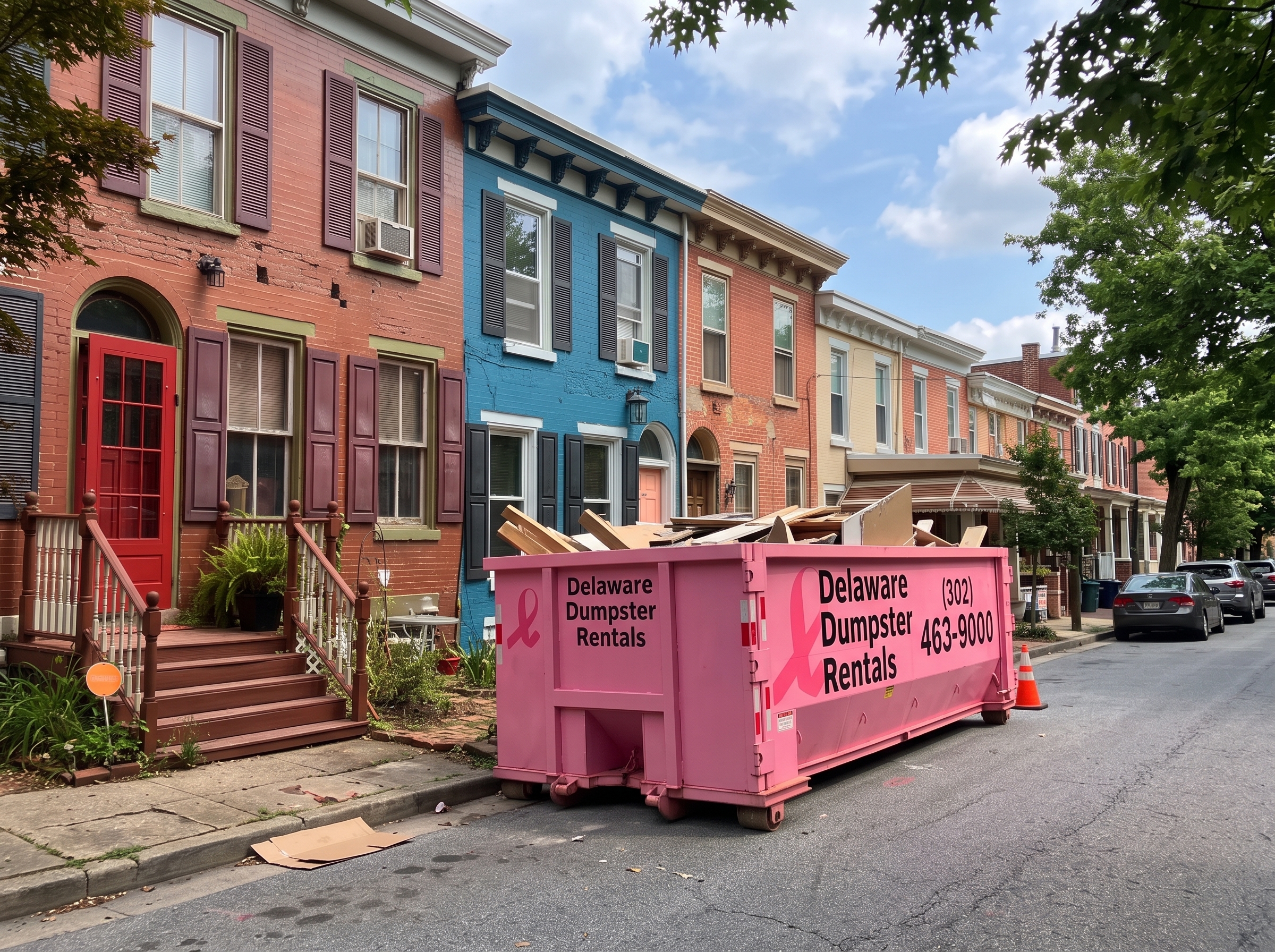

Choosing the right dumpster sizes shouldn’t feel like a guessing game. At Delaware Dumpster Rentals, we treat it like a conversation about your project, your property, and how you want the cleanup to feel from start to finish. When you match the container to the job, everything—from delivery to pickup—moves faster, smoother, and with less stress.
Why dumpster sizes matter more than you think
Picture this: you’re finally tackling that home renovation, garage cleanout, or landscaping overhaul you’ve been putting off. The momentum is great—until you hit the wall of overflowing debris, last‑minute dump runs, and the sinking realization that the container you chose is either too small or way more than you needed. That’s exactly the scenario we help our customers avoid.
Different dumpster sizes handle different types of projects and materials, and the wrong call can cost you time, extra fees, and frustration. Our role is to step in as the guide who’s walked countless homeowners, landlords, and small businesses through this same decision, day after day, across New Castle County and the surrounding areas.
Whether you’re clearing out a single room or stripping a roof, the right choice comes down to three simple questions: how much material you’ll generate, how heavy it will be, and how quickly you need it gone.
Understanding dumpster sizes in plain language
When people look up dumpster sizes, they usually see a wall of numbers: cubic yards, dimensions, weight limits. We translate those numbers into how it feels once the dumpster is sitting in your driveway and you’re actively tossing debris into it.
Cubic yards measure volume—the amount of space inside the dumpster. A “yard” might sound abstract, but think in pickup truck loads: smaller roll‑offs hold a few loads of junk; larger ones can swallow an entire renovation worth of debris. Dimensions—length, width, and height—tell you how the dumpster will sit on your property, whether it tucks nicely into a driveway or needs space along the curb.
We focus our offerings on sizes that actually make sense for residential and light commercial jobs in Delaware, instead of overwhelming you with options you’ll never truly need. That’s why our core lineup centers on containers that hit the sweet spot between capacity, footprint, and price for local projects.
Our most popular dumpster sizes in Delaware
For most of our customers in New Castle County and nearby communities, the heart of the decision comes down to two workhorse dumpster sizes: the 15‑yard and the 20‑yard. These two containers cover the vast majority of home and small business projects without overcomplicating the process.
The 15‑yard dumpster is a compact powerhouse. At about 14 feet long, 8 feet wide, and 4 feet high, it fits comfortably in most residential driveways while offering enough room for a serious weekend project. The 20‑yard dumpster stretches a bit longer and taller at roughly 16 feet long, 8 feet wide, and 5 feet high, giving you more volume to work with when the project goes beyond a simple cleanout.
We built our service around these dumpster sizes because they deliver the flexibility our customers need: they’re large enough to keep you from ordering multiple small containers, yet manageable enough to sit on tight lots and in busy neighborhoods throughout Wilmington, Newark, Middletown, New Castle, Bear, and beyond.
When a 15‑yard dumpster is the perfect fit
The 15‑yard dumpster is the size that surprises people in a good way. It looks modest when we drop it off, but once you start loading, you realize just how much clutter you can finally say goodbye to. Customers often choose this container when they’re ready to tackle projects that feel big emotionally but moderate in terms of physical debris.
It’s ideal for garage cleanouts where you’re clearing boxes, broken furniture, old tools, and general junk that’s been stacking up for years. It’s also a great match for small home renovation jobs like removing old flooring, cabinets from a single kitchen, or fixtures from a bathroom remodel. If you’re purging an attic, cleaning out a spare bedroom or two, or freshening up a rental property between tenants, this size gives you the breathing room to toss without constantly worrying about running out of space.
From our perspective, the 15‑yard works best when your project focuses on general household junk, light construction debris, or mixed materials that won’t push the weight limit with extremely dense items like concrete or dirt. It’s the go‑to size when you want enough room to finish the job without feeling like the dumpster dominates your property.
When a 20‑yard dumpster is the smarter move
Sometimes a project has more ambition behind it—and more debris to match. That’s where the 20‑yard dumpster steps in as the size that lets you plan boldly without worrying about running out of room halfway through. It’s our answer for customers who say, “We’re doing more than a cleanout. This is a full‑scale project.”
This container shines for multi‑room renovations, larger kitchen and bath overhauls, full‑home decluttering projects, and big landscaping jobs where you’re ripping out old shrubs, fencing, or yard structures. It handles more bulk material, more lumber, more drywall, and more mixed debris without forcing you into multiple swaps or reloads.
From roof replacements on small‑to‑medium homes to estate cleanouts where you’re dealing with decades of possessions, the 20‑yard size provides the breathing room serious projects need. When customers talk with us about big plans—transforming a space, prepping a home for sale, or handling the aftermath of a major life event—this is usually the container that fits the story they’re telling.
Matching dumpster sizes to your project type
We don’t throw generic answers at you when you ask what size you need. We start with the project itself, because the nature of the work shapes the ideal dumpster size more than any single number ever could.
For home renovation projects, we look at how many rooms you’re touching, whether you’re removing walls, flooring, cabinets, and fixtures, and how long the work will run. A single‑room refresh often pairs well with a 15‑yard dumpster, while multi‑room remodels, open‑concept transformations, and projects with heavier structural materials may call for a 20‑yard container.
Garage or attic cleanouts lean on the volume of stored items. If you’re taking out boxes, old furniture, and miscellaneous junk from one or two spaces, a 15‑yard dumpster should be plenty; if the clutter has spread across multiple rooms or an entire home, stepping up to a 20‑yard prevents mid‑project regrets. Landscaping jobs depend on the mix of soil, branches, stumps, and yard waste; lighter yard cleanups often fit a 15‑yard, while major tear‑outs and structural outdoor changes typically benefit from the extra room in a 20‑yard.
Thinking about weight, not just volume
Choosing between dumpster sizes isn’t only about how much you can fit inside. It’s also about how heavy that material becomes once it’s loaded. That’s why we talk openly with our customers about the difference between volume and weight, and how each affects the smartest choice for their project.
Light, bulky items—things like furniture, cardboard, household junk, and general debris—take up space without pushing limits on weight. Heavy materials like concrete, brick, roofing shingles, soil, and certain construction debris can hit a container’s weight cap long before it appears full. In other words, the same dumpster size behaves differently depending on what you put into it.
When you walk us through your project, we listen for those heavy components. If you’re removing sections of concrete, brick, or dense roofing materials, we may steer you toward a size and loading plan that keeps you safely within limits while still delivering the capacity you need. Our goal is to help you avoid surprise fees and ensure that the dumpster on your property is actually suited to the kind of debris you’re dealing with.
How we help you choose the right size
We treat every dumpster rental as a custom fit, even though the actual dumpster sizes are standard. You tell us your story—what you’re doing, where you’re doing it, how long you expect it to take—and we map that story to a container that makes sense.
We’ll ask practical questions: Is this mainly junk or mostly construction debris? Are you clearing one area or multiple floors? Is this a weekend project or a multi‑week renovation? We’ll also ask about your property layout, because the best size on paper still needs to land safely on your driveway or designated space without causing headaches for neighbors or blocking essential access.
Once we understand the scope, we match you with one of our dumpster sizes and talk through what it can realistically handle for your specific project. That conversation turns what could be a stressful guessing game into a straightforward decision you feel confident about.
Dumpster sizes for Delaware homes and neighborhoods
Delaware projects have their own rhythm. In New Castle County and the surrounding communities we serve—Middletown, Newark, New Castle, Bear, Hockessin, Odessa, Townsend, Smyrna, Dover, and more—driveway space, street access, and local regulations all play a part in how we guide customers on dumpster sizes.
Some homes have generous driveways where a 20‑yard container lands with room to spare. Others sit on tight streets, townhome communities, or older properties where smaller footprints work better. We’re familiar with the mix of urban, suburban, and semi‑rural layouts across Wilmington and New Castle County, and we factor that local knowledge into our recommendations from the start.
When you call us from a specific city or neighborhood—whether it’s Rockland, Claymont, Elkton, Chesapeake City, or one of the many towns we serve—we already have a sense of how our dumpsters fit there, both literally and in terms of community expectations. That local experience is part of what makes our guidance on dumpster sizes feel tailored instead of generic.
How rental time connects to dumpster size
Every project has its own timeline. Some customers want a quick, intense weekend cleanup; others need steady, ongoing disposal during a longer renovation. Our standard rental period gives you up to 10 days, which creates breathing room for both styles of work without pressuring you to rush.
The relationship between dumpster sizes and rental time is simple: larger containers often suit longer, more complex projects, while smaller containers pair well with shorter, focused efforts. A 15‑yard dumpster can be perfect for a dedicated cleanout where you know you’ll work hard for a few days, load everything, and call us for pickup. A 20‑yard may feel more natural when the project unfolds in phases—demo first, then cleanup, then final touches—over a week or more.
We help you weigh your timeline alongside your debris expectations, so the container you choose fits how you actually plan to work. That way, you’re not racing a clock with too much remaining junk, or staring at a half‑empty container long after the job is done.
Common mistakes people make with dumpster sizes
We’ve seen what happens when people try to guess their way through dumpster sizes without guidance. The same few mistakes pop up again and again—and they’re all avoidable.
One of the biggest missteps is underestimating how much debris a project will create. A garage or basement that “doesn’t look that full” can suddenly fill a smaller container once you start pulling everything out and breaking items down. Another mistake is ignoring weight by focusing only on visible volume. Heavy materials like roofing shingles, soil, or concrete can max out a dumpster long before it appears packed.
People also sometimes choose a size based purely on price, not considering how a slightly larger container could save them from additional hauls or extended labor. We counter these tendencies by talking openly with customers, walking through realistic scenarios, and recommending dumpster sizes based on what we’ve actually seen play out rather than abstract estimates.
How our local partnerships support smart sizing
Our role in the community goes beyond dropping off and picking up containers. We maintain responsible disposal partnerships, including working alongside facilities like the DSWA Landfill, to ensure that the waste from your project is handled properly after it leaves your property.
These relationships help us stay grounded in local standards for debris types, acceptable materials, and best practices for safe handling. That awareness feeds back into how we guide you on dumpster sizes, especially when you’re dealing with unusual materials or mixed loads that require extra attention.
When we help you choose a container, we’re thinking beyond the curb. We’re considering the full journey of your debris, and making sure the size you select supports a smooth path from loading to final disposal.
Turning your project story into the right dumpster size
Every time someone calls us, we hear a story first—not a number. Maybe it’s a family preparing a home for sale after years of memories and belongings have accumulated. Maybe it’s a homeowner finally renovating the kitchen they’ve been dreaming about, or a landlord resetting a property for the next tenant. Sometimes it’s a community group or school organizing a large cleanup with a clear goal in mind.
We listen to those stories, ask smart follow‑up questions, and then translate everything into a specific dumpster size that matches the reality on the ground. That process turns an intimidating decision into a straightforward step in your project plan. Instead of obsessing over cubic yards, you walk away knowing, “A 15‑yard will handle this garage and basement cleanout,” or “A 20‑yard is right for our full‑home remodel.”
That’s the role we play across Wilmington, Newark, Middletown, New Castle, Bear, Hockessin, and all the communities we serve: the partner who makes the container decision feel clear, confident, and aligned with the work you’re about to take on.
FAQs about choosing dumpster sizes
How do I decide between a 15‑yard and 20‑yard dumpster?
We ask about your project details, including how many rooms you are working on, the type of debris, and how long the work will take. Based on that information, we recommend either a 15‑yard or 20‑yard dumpster that fits your specific needs.
Will a dumpster fit in my driveway?
We review the available space on your property and consider access points, obstacles, and local conditions. If your driveway can safely accommodate the length and width of the chosen dumpster size, we schedule delivery there; if not, we discuss alternate placement options.
What if I’m not sure how much debris I’ll have?
We talk through the scope of your project and use examples from similar jobs to estimate expected debris volume and weight. If there is any uncertainty, we guide you toward the size that is more likely to handle the full project without requiring an additional container.
Can I put heavy materials like concrete or dirt in the dumpster?
We confirm what types of heavy materials you plan to dispose of and explain the weight limits associated with our dumpsters. If your project includes items like concrete, brick, or soil, we provide instructions on how to load those materials so they stay within safe limits for the chosen size.
How long can I keep the dumpster?
We offer a standard rental period of up to 10 days. Before delivery, we discuss your project timeline and confirm that the scheduled rental length matches the work you plan to complete.
What areas do you serve for dumpster rentals?
We provide dumpster rentals across New Castle County and many surrounding communities. This includes cities and towns such as Wilmington, Middletown, Newark, New Castle, Bear, Hockessin, Odessa, Townsend, Smyrna, Dover, and additional nearby areas within our service radius.
Share this article
Latest articles

November 16, 2026
November 16, 2026