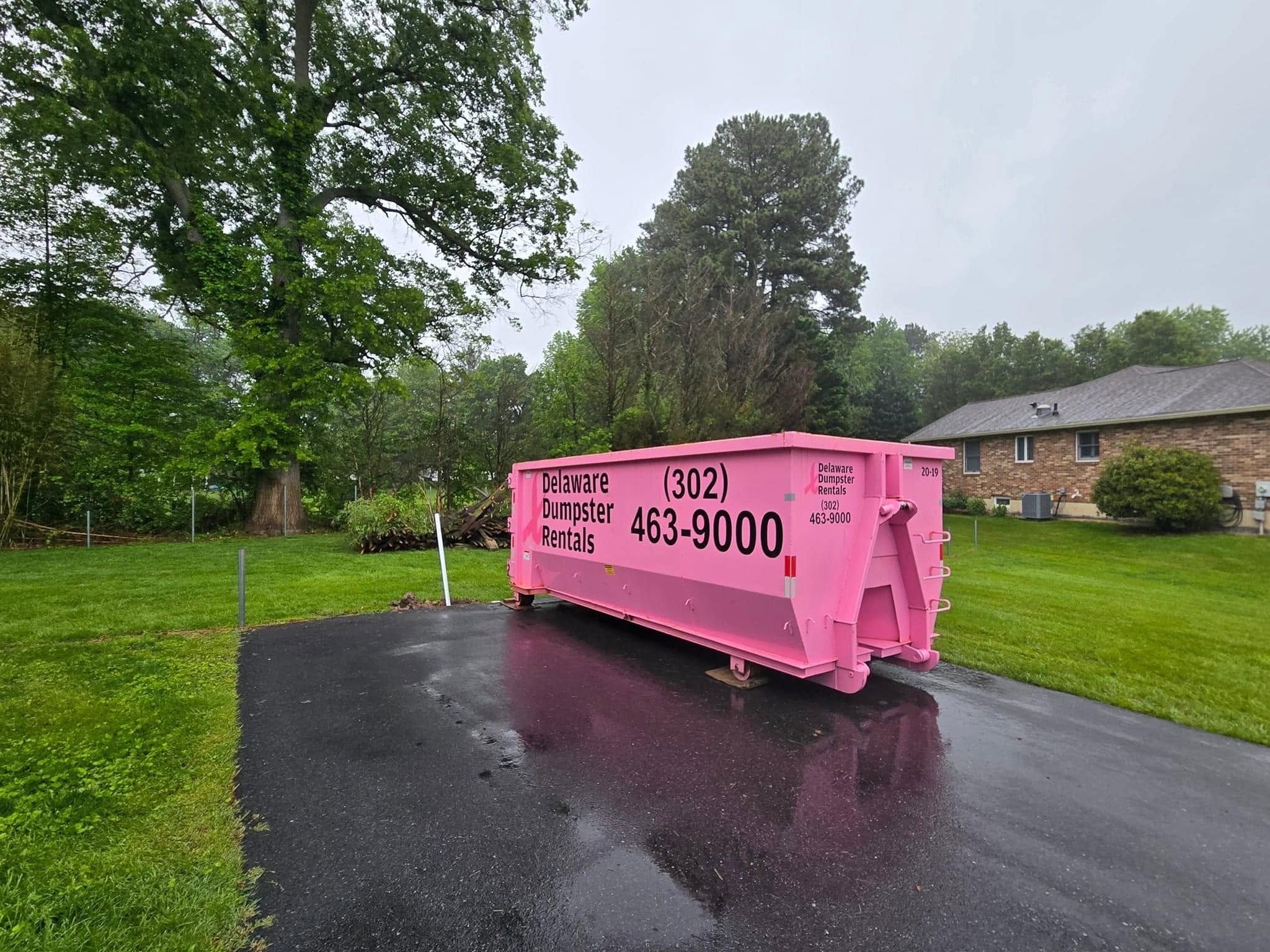
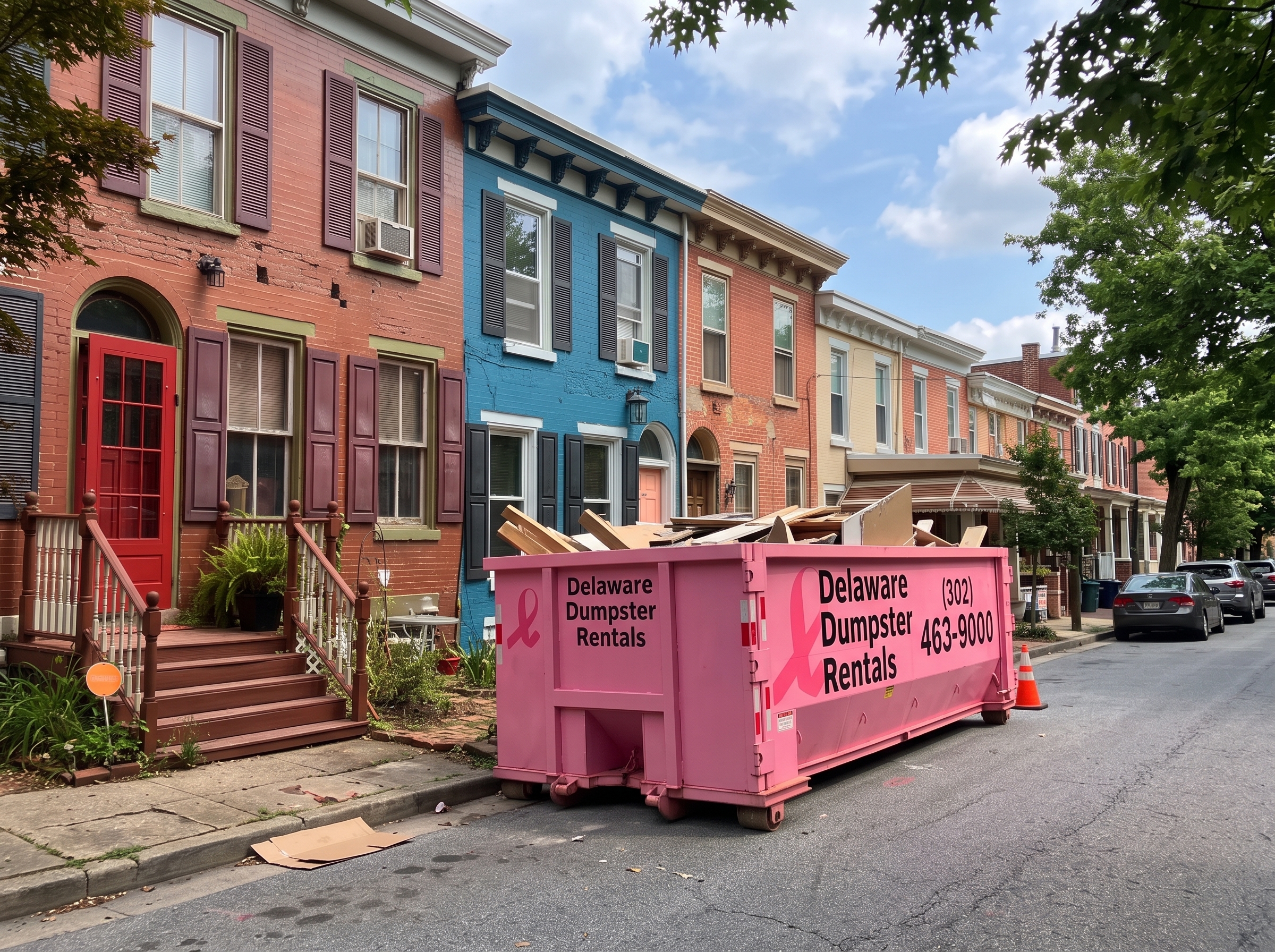
At Delaware Dumpster Rentals, we believe the cleanup plan belongs in that conversation from the beginning. Before damaged plaster comes down or worn roofing comes off, you need a clear distinction between materials worth saving, ordinary construction debris, and anything that requires specialized handling.
For historic home renovation projects in Wilmington, thoughtful waste management helps support a larger goal: bringing a house into the present without carelessly throwing away its past. We provide dumpster rentals for home renovations and roof replacement projects throughout Wilmington and the surrounding area, giving homeowners and contractors a practical way to manage approved debris as work moves forward.
The dumpster may not appear in your favorite before-and-after photograph. Still, planning what goes into it—and what stays out—can shape the entire renovation.
Wilmington’s Older Homes Tell the Story of Its Neighborhoods
Walk through Wilmington’s historic neighborhoods, and the city’s residential history becomes visible at street level. A decorated cornice draws your eye upward. A row of closely spaced houses gives the block its rhythm. Different rooflines, entrances, and brickwork reveal how builders and homeowners shaped each neighborhood over time.
These places do not all share the same architectural story. Wilmington’s historic districts include neighborhoods with distinct development patterns, building types, and periods of construction. Understanding those differences gives a renovation more direction than simply choosing finishes that look “old-fashioned.”
Quaker Hill: A Neighborhood Built Around an Early Community
Quaker Hill centers around the Friends Meeting House, built in 1816 at Fourth and West Streets. The surrounding neighborhood developed with substantial three-story row houses, followed by more elaborate detached homes and churches as Wilmington grew. The city identifies its variety of architectural styles, materials, and ornamentation as important parts of the district’s character.
For a homeowner, that history encourages a closer look before demolition begins. A plain-looking doorway may belong to an earlier building phase. A decorative element may connect the house to its neighbors.
The right starting point is not deciding what to remove. It is learning what you have.
Cool Spring and Tilton Park: Architectural Variety Worth Protecting
The Cool Spring/Tilton Park district features late nineteenth- and early twentieth-century residential architecture, including Queen Anne, Italianate, Colonial Revival, and Second Empire styles. Much of the district developed between 1885 and 1900 on the former Cool Spring estate.
That range makes a one-size-fits-all renovation approach especially unhelpful. A treatment that suits one house may look completely out of place on the next.
Instead, homeowners can use the building itself as a guide. Photograph its details. Study the surrounding block. Ask a preservation professional which features define the house before making irreversible decisions.
Trinity Vicinity: Closely Connected Homes and Shared Streets
Trinity Vicinity includes row houses and semi-detached homes dating from the 1870s into the early twentieth century. Its architectural styles include Italianate, French Second Empire, and Neo-Classical Revival.
These closely arranged homes also bring practical considerations into focus. Renovation work does not stop at the front door. Workers, materials, deliveries, and debris must move through a neighborhood that continues its daily routine.
For us, that makes early communication essential. Tell us about the property’s access, the proposed work, and any placement concerns before scheduling a container. A workable cleanup plan should respect the house and the block around it.
Start With Preservation, Not Demolition
The most useful question in an older home is often surprisingly simple: Does this actually need to come out?
A dated room can tempt anyone to start fresh. Yet “dated,” “damaged,” and “beyond repair” describe very different conditions. We encourage homeowners to settle those distinctions with their contractor before a dumpster arrives.
Think of preservation as a series of deliberate choices rather than a rule that nothing can change. You can pursue a comfortable, functional home while remaining thoughtful about the materials and craftsmanship already there.
Create a Keep, Repair, and Remove Plan
Walk through the renovation area with the people who will perform the work. Identify what stays, what needs professional evaluation, and what the project will remove.
A simple written inventory might include:
- Interior doors and their original hardware.
- Baseboards, window casings, and decorative trim.
- Fireplace surrounds and mantels.
- Stair rails, balusters, and newel posts.
- Flooring that may be suitable for repair.
- Fixtures or built-ins that deserve further assessment.
Treat this as a planning document, not a promise that every old component can safely return to service. Condition, contamination, code requirements, and the renovation’s scope still matter.
Once you make those decisions, label saved pieces clearly. “Keep” should never depend on someone remembering a hallway conversation three weeks later.
Give Salvaged Materials Their Own Destination
Picture a crew carrying out two nearly identical doors. One belongs in the disposal stream. The other needs careful storage for reinstallation. Without labels and separate staging areas, a rushed moment can undo a thoughtful decision.
Set aside a dry, protected location for approved salvage. Photograph pieces before removal, label their original locations, and keep related hardware together.
For historic home renovations in Wilmington, we recommend treating the dumpster as the destination for confirmed waste—not as a temporary holding area while someone decides whether a component matters.
That small change in mindset can prevent a very permanent mistake.
Check Historic Review Requirements Before Scheduling the Mess
A house can look ready for a new roof or replacement windows long before the project is ready to begin.
Wilmington’s Design Review and Preservation Commission oversees proposed changes to properties within the city’s codified historic overlay zoning districts. If your property falls within one of those districts, contact the city about the review requirements that apply to your proposed work.
Do not assume that a contractor’s availability means you can begin immediately. Likewise, do not assume every older Wilmington house falls under the same review process.
Confirm the Property’s Status and the Proposed Scope
Start with the address and a clear description of the work. Explain whether you plan to repair existing materials, replace exterior features, alter openings, or undertake another substantial change.
Ask the city which approvals your specific project needs and when you should obtain them. Keep historic review questions separate from building permits and any permissions required for equipment placement.
From a waste-planning standpoint, the sequence matters: clarify the project, secure applicable approvals, confirm the contractor’s schedule, and then arrange delivery.
Otherwise, a container can occupy valuable space while the work waits for a decision.
Keep the Cleanup Schedule Tied to Real Milestones
Old-house renovations often move through several distinct stages. Investigation comes first. Selective removal follows. Repairs and installation take place after the crew understands what lies behind the finishes.
We suggest tying waste removal to those actual stages rather than an optimistic completion date. Tell us when approved debris will start leaving the house and which phase will produce the heaviest or bulkiest material.
That conversation helps us discuss a rental arrangement around the work you have planned, rather than around work that may still change.
Older Houses Require a Hazard Assessment Before Tear-Out
There is a point in many renovations when curiosity turns into a crowbar. In an older house, pause before that moment.
Some building materials require assessment before anyone cuts, sands, breaks, or removes them. A convenient dumpster does not replace testing, containment, protective measures, or specialized disposal arrangements.
For historic home renovation projects around Wilmington, this distinction belongs near the top of the plan—not in a cleanup conversation after demolition.
Lead Paint Changes How Renovation Waste Must Be Controlled
Renovation work in a pre-1978 home with lead-based paint can create dangerous lead dust. EPA recommends hiring a lead-safe certified contractor, and its Renovation, Repair and Painting program generally requires certification and lead-safe practices for paid work that disturbs painted surfaces in covered older housing, subject to the rule’s requirements and exceptions.
Waste control forms part of that work. EPA advises collecting and containing renovation waste so dust and debris do not escape before disposal. Its homeowner guidance also emphasizes checking state and local disposal requirements.
Do not carry loose, dusty painted debris through occupied rooms or assume that throwing it into an open container resolves the exposure risk. Have the qualified contractor establish the handling procedure, then confirm the disposal arrangements with us before loading.
Suspected Asbestos Requires Professional Evaluation
You cannot reliably identify asbestos-containing material by appearance. EPA recommends professional sampling when suspected material is damaged or when planned renovation would disturb it. Examples include certain older floor tiles, ceiling tiles, and pipe coverings.
If the crew uncovers something suspicious, stop disturbing it and arrange an assessment. Do not break it into smaller pieces to make cleanup easier.
EPA recommends trained and accredited asbestos professionals for inspection and handling, including repair or removal when necessary.
Our standard rental dumpster is not a substitute for an asbestos management plan. Keep suspected material out of the ordinary debris stream while qualified professionals determine what it is and how to proceed. Our published renovation guidance excludes asbestos-containing materials from standard dumpster disposal.
Roofing Tear-Offs Need Their Own Waste Strategy
A roof replacement changes the pace of a renovation. For days, the work may seem confined to ladders, measurements, and material deliveries. Then tear-off begins, and a large amount of debris needs a destination in a short time.
We provide dumpster rentals for roof replacement and repair projects, but planning should start with the roofing contractor’s description of the materials—not simply the size of the house.
Ask what the crew expects to remove, what remains uncertain, and whether any materials need assessment before work begins.
Discuss Weight Before Choosing Container Capacity
Roofing debris creates a different loading problem from empty cabinet boxes or construction packaging. Dense materials can reach a container’s allowable weight before they fill its available space. Our delivery guidance specifically identifies roofing shingles among the materials that require close attention to weight limits.
Tell us whether the project involves a limited repair or a complete tear-off. Share the contractor’s estimate of material quantities and describe any decking removal included in the job.
Avoid treating unused space as permission to add unlimited debris. The agreed weight allowance and loading requirements still apply.
For a historic Wilmington roof renovation, that early conversation helps connect the roofing scope to a realistic disposal plan.
Protect the Details Below the Roofline
The roof may be the focus, but the work happens above everything you hope to preserve.
Before tear-off, ask the contractor how they will protect entrances, windows, porches, landscaping, and decorative features. Establish where workers will move debris and which areas must remain clear.
We recommend agreeing on those routes before choosing the final container location. A spot that looks convenient on paper may create an awkward path past a vulnerable railing or heavily used doorway.
Include daily cleanup in the contractor’s scope. A dumpster gives approved debris a destination; it does not replace careful housekeeping around the property.
Interior Gut Jobs Call for Selective Removal and Steady Cleanup
Inside an older house, demolition can reveal more history than anyone expected. A later partition may hide an earlier doorway. Several flooring layers may sit above the material you hoped to restore. Behind a worn finish, the crew may discover a condition that changes the work entirely.
That uncertainty makes an interior gut renovation different from simply emptying a room.
Our recommendation is to pair selective removal with an orderly debris plan. Save what the project has identified for preservation, assess unexpected materials, and move approved waste out as work progresses.
Do Not Turn “Gut Renovation” Into an Automatic Instruction
Sometimes a project genuinely requires extensive removal. Still, “take it down to the studs” should reflect a considered scope, not a habit.
Before work begins, ask which walls, ceilings, flooring, and trim must come out and why. Identify areas where the contractor should stop and consult you before proceeding.
We suggest putting those pause points in writing. For example, the crew might need approval before removing concealed millwork or extending demolition beyond a defined room.
A historic home renovation in Wilmington can pursue substantial improvements without treating every existing feature as disposable.
Plan for Both Bulk and Density
Interior debris varies widely. Cabinet boxes consume space. Plaster, tile, and similar materials contribute substantial weight. A project that combines them needs more thought than simply choosing the largest container that fits. Our renovation and delivery guidance emphasizes matching the debris type to container capacity and weight allowances.
When you call us, describe the room and the removal scope. “We’re updating a bathroom” provides less useful information than “We’re removing the tile, wall finishes, vanity, and tub.”
The more specific the description, the better the planning conversation.
Keep heavy-material estimates separate from general household clutter, too. An attic cleanout and a plaster removal project can look similar in volume while creating very different loading concerns.
Establish a Safe Route Out of the House
Before demolition, choose how workers will move approved debris from each work area to the container. Consider the surfaces and architectural details along that route.
We recommend discussing floor protection, doorway protection, carrying methods, and access restrictions with the contractor. Keep saved materials away from the disposal path so workers do not confuse the two.
Where hazardous dust is involved, let the qualified professional’s containment plan control the procedure. A shorter route is not automatically an acceptable route.
The goal is steady movement without turning a preserved staircase or finished hallway into another repair project.
Fit the Dumpster Plan to the Property
Older Wilmington properties do not always offer the broad driveways and generous setbacks that make equipment placement straightforward.
A workable plan starts with honest information. Tell us about narrow approaches, nearby structures, overhead obstructions, surface conditions, and the location you have in mind. Our delivery guidance emphasizes access, clearance, a suitable placement surface, and advance preparation.
Do not judge access by the container’s footprint alone. The delivery vehicle also needs room to operate safely.
Discuss Fragile or Historic Surfaces in Advance
An old paved area may be attractive without being suitable for a loaded roll-off container.
If your proposed location includes historic brick, stone, decorative paving, or an area with uncertain support, raise the issue before delivery. Ask the appropriate property or construction professional to assess questionable surfaces.
We can discuss placement requirements, but protective boards do not make an unsuitable surface suitable. Choose the location based on support and access first, then discuss appropriate surface protection.
This is another place where preservation and cleanup meet: avoiding damage is better than adding a second restoration project.
Respect the Street’s Daily Routine
A renovation shares space with ordinary life. Neighbors still need to leave for work. Deliveries still arrive. People still walk dogs and carry groceries home.
We recommend sharing the broad work schedule with adjacent neighbors and keeping entrances and pedestrian routes clear. Where placement involves public space, verify current city requirements and obtain the necessary authorization before scheduling. Our delivery guidance advises checking local rules for street, sidewalk, or alley placement.
Do not promise neighbors a pickup date until the project schedule and rental arrangements support it. Clear, realistic communication usually serves everyone better than cheerful guesses.
Choose a Rental Around the Work You Actually Have
At Delaware Dumpster Rentals, we offer 15-yard and 20-yard roll-off dumpsters, with standard rental periods of up to 10 days. Our published dimensions are 14 feet long, 8 feet wide, and 4 feet high for the 15-yard container, and 16 feet long, 8 feet wide, and 5 feet high for the 20-yard container.
Those measurements provide a starting point, not an automatic recommendation.
For Wilmington historic home renovation projects, we want to understand the debris, the property, and the sequence of work before you choose.
Bring a Clear Material List to the Conversation
Before contacting us, gather a few details:
- The rooms or exterior areas included in the work.
- The materials your contractor expects to remove.
- Any particularly heavy debris.
- Materials awaiting testing or professional assessment.
- The proposed delivery location.
- The expected start of approved debris removal.
- Whether the project includes separate roofing and interior phases.
You do not need a perfect inventory. You do need to distinguish known waste from unanswered questions.
Ask us to confirm accepted materials, the included weight allowance, loading requirements, rental terms, and potential additional charges for your specific booking.
Leave Room for Discoveries Without Losing Control
A renovation schedule should allow for uncertainty without letting waste accumulate indefinitely.
If the crew uncovers an issue that changes the scope, revisit the disposal plan. Tell us if the material mix changes or if you expect more debris than originally discussed. Contact us early if the schedule shifts.
Our standard rental period provides up to 10 days, but longer projects require a conversation about current arrangements and availability rather than an assumption that the original booking covers everything.
A short update during the project can prevent a difficult decision when the container is already full.
Keep Reuse Separate From Disposal
Not everything removed from an old house belongs in a dumpster. Equally, not everything old is automatically suitable for reuse.
We recommend evaluating potential salvage before demolition and confirming an actual destination. If you hope to donate a fixture or architectural component, contact the intended recipient first. Ask about condition requirements, contamination concerns, removal responsibilities, and pickup arrangements.
That turns “someone might want this” into a practical plan.
Save With Purpose
A carefully labeled door with its hardware, measurements, and original location offers a clearer path to reuse than a damaged door leaning outdoors for weeks.
Choose the pieces that have a realistic future. Store them properly and keep them out of the waste-loading area. If a recipient declines an item, reassess it rather than leaving the decision until pickup day.
We also suggest asking which materials may qualify for separate recycling or recovery arrangements. Do not assume every material placed in a mixed renovation load follows the same disposal route.
The most thoughtful plan gives each material a destination before workers carry it outside.
Frequently Asked Questions About Wilmington Historic Home Renovations
Should I photograph historic features before contractors begin removing materials?
Yes. We recommend photographing each work area and taking close-up images of trim, hardware, built-ins, and other features you plan to preserve. Include location notes and label components before removal. Share the record with your contractor so the preservation plan does not rely on memory. Photographs also help distinguish saved materials from approved waste during a busy demolition phase.
Does living in a Wilmington historic district affect plans to replace exterior features?
It can. Wilmington’s Design Review and Preservation Commission oversees proposed changes within the city’s codified historic overlay zoning districts. Contact the city with your address and proposed scope before ordering replacements or beginning removal. Confirm which review requirements apply to your property rather than assuming that every older home—or every type of alteration—follows the same process.
What should happen if renovation uncovers original woodwork behind newer walls?
We recommend pausing removal in that area, photographing the discovery, and asking the contractor or a preservation professional to evaluate it before work continues. Keep the material out of the dumpster while you decide whether it can remain, undergo repair, or serve another purpose. An agreed discovery procedure helps prevent workers from making an irreversible disposal decision under time pressure.
Can suspected asbestos flooring be broken up while waiting for test results?
No. Do not deliberately disturb suspected asbestos-containing flooring while awaiting assessment. EPA advises professional sampling when suspected material could be disturbed during renovation, and you cannot identify asbestos reliably by sight. Keep the area protected and let qualified professionals determine the next steps. Do not mix suspected material with ordinary renovation debris.
Should a roofing tear-off and interior demolition share one debris plan?
They should share an overall plan, but they may need different loading and scheduling arrangements. Roofing shingles and dense interior debris can create weight concerns, while cabinets and other bulky components use substantial space. Tell us about both phases before booking so we can discuss the material mix, applicable limits, timing, and whether separate loads would make more sense.
Help the House Keep Its Story
The best part of an old-house renovation often arrives quietly. Someone reinstalls the original door. A repaired stair rail feels steady again. The room works better, but it still feels like it belongs to the house.
That result starts long before the finishing touches. It begins with careful decisions about what stays, qualified assessment of questionable materials, and a plan for everything that must leave.
At Delaware Dumpster Rentals, we are a family-owned business serving New Castle County, including homeowners taking on renovation and roofing projects in Wilmington. We provide the container and waste-removal service; you and your project team decide how to carry the house forward.