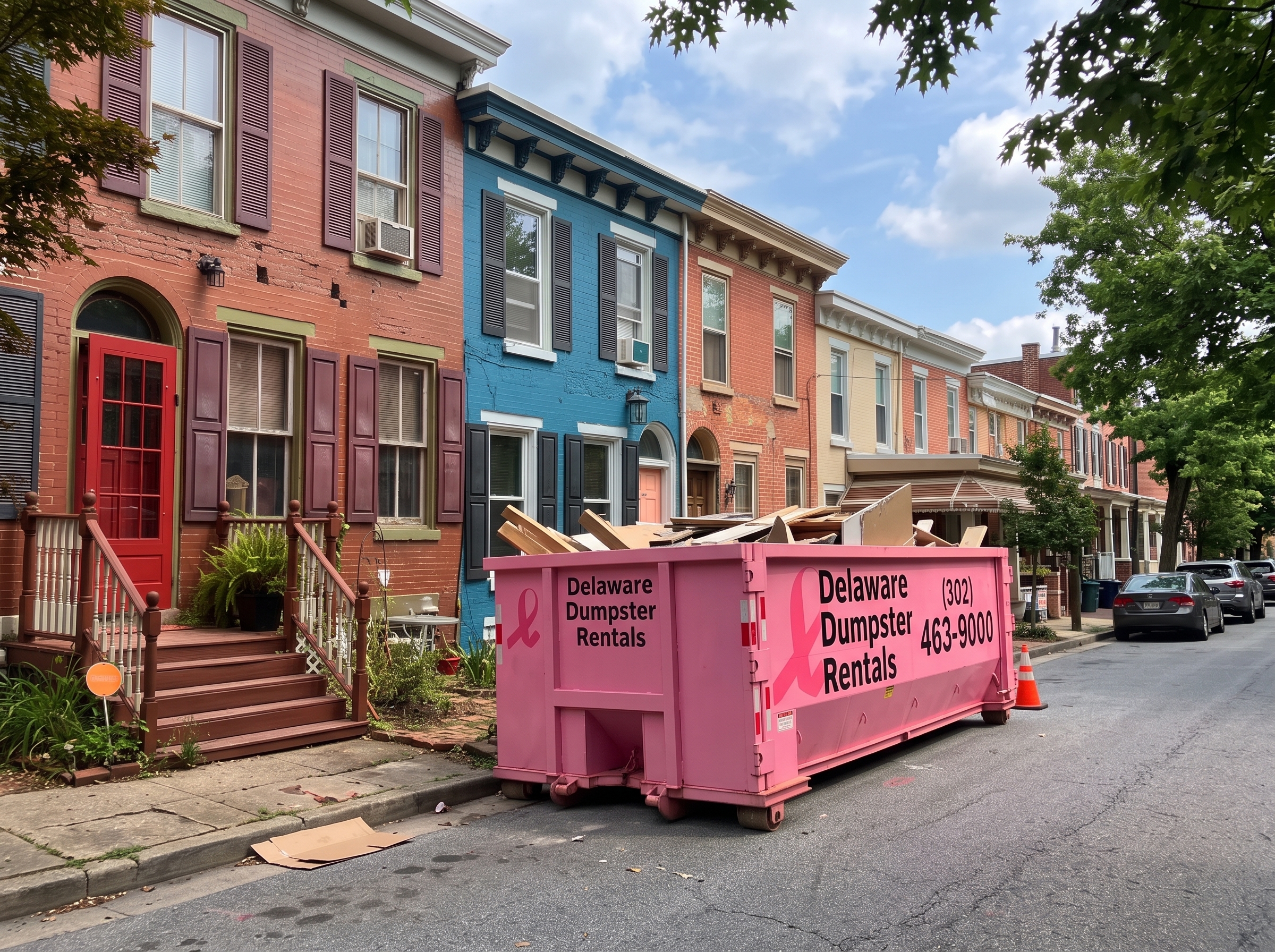

By the afternoon, you can finally see the garage floor again. Then someone carries out one last bulky item and asks the question that can turn a good cleanup into a pickup problem:
“Can’t we just put it on top?”
At Delaware Dumpster Rentals, we want your project to finish as smoothly as it started. That means keeping every load within its safe loading boundary. The dumpster fill line marks the maximum permitted height for debris—not a target to pile above once the container starts looking full. Our loading guidance asks customers to keep materials below the top edge so the container can leave the property safely.
That boundary matters whether you are clearing a longtime family home, replacing worn kitchen cabinets, or taking back a garage that has slowly become a storage room. Understanding it before you begin helps you recognize when to stop, avoid unnecessary rehandling, and prepare your dumpster for pickup.
What Is a Dumpster Fill Line?
A dumpster fill line identifies the highest permitted level for debris inside the container. Think of it as the stopping point for loading height. Materials need to remain below the designated boundary, with nothing projecting above it.
The exact appearance of a fill marking can vary between containers. Do not depend on a particular paint color, sticker, or stripe you remember from another rental. Before you begin, identify the loading boundary for the dumpster delivered to your property. Our published instructions tell customers to keep everything below the top edge.
The important part is not what the marker looks like. It is what the boundary tells you: the usable loading space ends here.
The boundary applies to the highest item
A mostly low load can still have an overfill problem. Picture a container with bags and flattened cardboard sitting comfortably below the sides, but one long board pointing upward from the middle.
The average height does not make that board acceptable. The highest piece still needs to stay below the permitted loading level.
Check individual objects as well as the overall surface. Furniture legs, branches, cabinet corners, and rolled carpeting can extend higher than the material around them. Our loading guide specifically warns against leaving boards, bags, furniture, or branches above the sides.
An open top does not mean unlimited height
A roll-off dumpster makes large cleanups easier because you can load bulky debris into an open container. However, the space above its walls is not extra disposal capacity.
That distinction can be easy to overlook when the job is nearly finished. A chair might appear to balance across the opening. A bundle of branches might seem secure enough for a short trip. Neither situation changes the loading boundary.
The container must work as a transportable load, not merely as a place where everything can temporarily rest.
Why a Dumpster Needs a Clear Stopping Point
When a dumpster sits still in your driveway, an overloaded pile may not look especially troublesome. Nothing is moving. The weather may be calm. That final piece of furniture seems unlikely to go anywhere.
Pickup changes the situation.
The container must be lifted onto a truck and transported away. A load that looks settled on the ground still needs to remain contained during handling and travel. Keeping debris below the designated fill level helps make that possible.
The walls help contain the debris
The dumpster’s sides provide a physical boundary around the load. When material extends above them, you lose that same containment around the protruding portion.
A branch resting inside the container is different from a branch balanced across the opening. A dismantled shelf lying flat is different from an upright panel projecting above the rim.
This is why “it fits” needs a more useful definition. An item fits when it stays inside the permitted loading space—not simply when you can let go of it without it immediately falling.
The load must be ready for covering and transport
The driver also needs to prepare the load for travel. Protruding debris can interfere with covering and securing the container, which is one reason rental providers connect overfilled dumpsters with pickup problems.
A cover does not create extra room above the walls. It cannot turn an oversized pile into a properly contained load.
When you respect the fill boundary from the beginning, you leave the driver a container that is better prepared for the next stage of the job.
Why Light Debris Still Needs to Stay Below the Line
One of the easiest mistakes is treating the fill line as a rule that applies only to heavy construction waste.
It does not.
A cardboard box weighs far less than a piece of countertop, but that does not make it acceptable above the rim. The loading-height rule concerns containment and transportation as well as weight. Our guidance applies to light materials, including cardboard and branches.
Cardboard and packaging can create a false finish
Near the end of a renovation, the heavy demolition debris may already be loaded. What remains looks harmless: empty cartons, protective packaging, and a few lightweight scraps.
This is often when customers feel tempted to keep building upward.
Instead, flatten approved cardboard while usable space remains below the boundary. Do not create a loose cap of packaging across the top and assume its low weight makes the arrangement safe.
A project is not ready for pickup until those last lightweight pieces meet the same height requirement as everything underneath.
Branches can hide how much space they occupy
Yard debris presents a different challenge. Branches overlap, catch on one another, and create pockets of empty space. A few forked limbs can make a container look full before the lower space has been used well.
However, pushing more branches onto the top only raises the pile.
Our loading guide recommends keeping manageable branches arranged consistently and preventing sharp ends from protruding above the container. If your cleanup includes significant soil, stone, or other dense landscaping debris, discuss those materials with us before loading them.
The solution depends on the material, but the stopping point remains the same.
Dumpster Fill Line vs. Weight Limit: Two Different Boundaries
A fill-height limit and a weight allowance answer different questions.
The fill line tells you how high debris may reach. The weight allowance tells you how much disposal weight your rental includes. A separate safe hauling limit may also affect whether a load can be transported.
These boundaries work together, but one does not replace the other. A dumpster can remain below its fill line and still contain too much weight. It can also hold relatively light material that extends too high.
Bulky debris often uses space first
During a household cleanout, the container may fill with damaged furniture, dismantled shelving, cardboard, and other awkwardly shaped items.
Those materials can consume substantial space without forming a particularly dense load. You might reach the height boundary while still feeling that the debris “cannot weigh that much.”
That observation does not authorize another layer. Once the container reaches its permitted fill level, stop adding material and contact us about what remains.
Dense debris can reach a weight limit first
Now picture a different project: removing ceramic flooring from several rooms.
The pieces settle into a relatively compact layer. You can still see plenty of room above them, but that empty space does not tell you how much weight the dumpster already holds.
Tile, roofing shingles, brick, concrete, and soil require particular attention because their weight can become the limiting factor before the dumpster looks full. We ask customers to contact us before loading significant amounts of these materials.
A larger container does not mean unlimited heavy material
At Delaware Dumpster Rentals, we offer 15-yard and 20-yard dumpsters for a variety of household and project needs. The additional space in a larger container can help with bulky debris, but it does not make every possible heavy load appropriate.
Tell us what you are removing, not just which room you are remodeling.
“Bathroom debris” might mean a vanity and some packaging. It might also mean a substantial amount of tile and mortar. Those descriptions lead to different loading considerations.
What Can Happen When Debris Extends Above the Fill Line?
An overfilled dumpster does not always announce itself with a dramatic collapse. Sometimes the problem is one upright board. Sometimes it is a mattress resting across the opening.
Even a small amount of protruding debris deserves attention before pickup.
Rental providers identify excess height as a potential cause of removal delays, unloading work, and additional charges under the applicable rental terms. The exact response depends on the provider, the load, and the agreement.
Excess material may need to come back out
If the load cannot be transported safely, some debris may need to be removed or repositioned before the container can leave.
That is inconvenient at any stage, but especially after a long day. The gloves have come off. The helpers have gone home. Everyone thought the cleanup was finished.
Avoiding that second round of handling is one of the strongest reasons to watch the boundary while loading. It is easier to leave an item out than to retrieve it from an unstable pile later.
Pickup timing can become more complicated
An overfilled container may not be ready when the truck arrives. That can interfere with the removal you planned around, particularly when contractors, deliveries, or driveway access depend on the dumpster leaving.
Do not assume the driver can solve an overloaded pile at the curb. Contact us before pickup if anything extends above the permitted level.
Early communication gives us an opportunity to discuss the situation before equipment arrives and the project is waiting on a decision.
Extra costs depend on the rental terms
Overfilling and exceeding an included weight allowance are different issues. Providers may address them through different charges or procedures. An overweight load may incur weight-related charges, while an overfilled load may create additional handling or return-trip costs.
We do not want you guessing about those distinctions halfway through a project.
Review the terms of your rental and ask us about any loading concern before it becomes a pickup problem. Clear expectations make it easier to manage both the cleanup and its budget.
How to Recognize That Your Dumpster Is Getting Close to Full
You do not need to wait until debris reaches the rim to assess the remaining space.
In fact, the most useful check happens earlier: when you still have room to make ordinary loading decisions without reaching into a nearly full container.
Look at what remains outside as well as what is already inside. A low-looking pile of small scraps may be manageable. Two intact cabinets and a long section of shelving require a different conversation.
Check the load from more than one side
A container can look level from one angle while hiding a raised corner on the opposite side.
Walk around it from ground level where access is safe. Look for isolated high spots, leaning pieces, and material that projects beyond the sides. You are checking the whole boundary, not just the section nearest the loading path.
Our existing loading guidance recommends periodic ground-level checks rather than waiting until the container is full.
Watch the tallest pieces as the lower space disappears
Long objects deserve attention before the final layer.
A board that could have rested flat earlier may stand upright once smaller debris surrounds it. A rolled rug may fit lengthwise but not vertically. Furniture can create the same problem when legs or backs remain attached.
Do not force these objects into a bad position simply because they are next in line. Set them aside safely and reassess the available space.
Compare remaining space with remaining work
A nearly full dumpster can still be enough if the project is genuinely finished.
It is a different situation if another room awaits demolition.
Take stock before the next major phase begins. If your project has expanded, let us know. Our loading guide asks customers to revisit the plan when the quantity or type of debris changes, especially when dense material becomes part of the job.
The “One Last Item” Problem
There is something satisfying about finishing a cleanout completely. Nobody wants a broken dresser lingering in the garage after everything else has gone.
That feeling can make the final few minutes surprisingly difficult.
You have already done the hard work. The driveway looks better. The old storage room finally feels usable. Leaving one object behind seems like admitting defeat.
It is not.
Stopping at the safe fill level means you have used the rental responsibly. Building above it means the disposal plan needs adjustment.
Do not count on the load settling
A pile might shift as materials settle, but anticipated settling is not a loading plan.
Do not place debris above the boundary and hope it will sink before pickup or during the ride away. Our guide specifically warns against leaving an item across the opening and expecting it to settle during transportation.
The load needs to meet the height requirement before it moves.
Do not climb on debris to force more space
Trying to compress a nearly full dumpster by walking or jumping on its contents creates a different problem.
Renovation and cleanout debris can include unstable surfaces, sharp edges, nails, and gaps you cannot see. Our loading instructions warn against entering a container when loose debris or sharp materials make footing uncertain.
If making something fit requires climbing onto the pile, stop. The remaining item is not worth turning the final stage of cleanup into an injury.
What to Do If You Have Already Overfilled the Dumpster
First, stop adding material.
Then assess the situation from a safe position on the ground. Do not pull at a buried branch, tug a board supporting other debris, or reach into a pile that could move unexpectedly.
Contact us and explain what extends above the loading boundary. A description of the material and where it sits will help us discuss the next step.
Tell us what changed
Perhaps the cleanout expanded from the garage into the attic. Perhaps demolition exposed another layer of flooring. Perhaps a relative arrived with additional furniture after you had nearly finished.
These things happen during real projects.
What matters now is explaining the actual situation rather than trying to make the original estimate work at any cost. Tell us how much debris remains and whether the load contains substantial heavy material.
Keep the surrounding area accessible
While you wait for guidance, keep remaining debris out of the truck’s approach, pedestrian routes, and areas people need to use.
Do not lean extra boards against the container or balance items on its walls. A problem inside the dumpster should not become a second problem around it.
Our pickup guidance also asks customers to keep the access route clear and check around the container for loose debris before removal.
Plan for the Fill Line Before Delivery Day
The easiest time to prevent overfilling is before the dumpster arrives.
Walk through the project and look closely at the items that will consume the most space. Open the storage closet. Check behind the workbench. Remember the shelving that will come out after the boxes disappear.
Anyone who has cleaned an old garage knows how often one job reveals another.
Describe the whole project when you book
Tell us about the bulky pieces, the number of areas involved, and the type of demolition debris you expect.
Our 15-yard dumpster measures 14 feet long, 8 feet wide, and 4 feet high. Our 20-yard option measures 16 feet long, 8 feet wide, and 5 feet high. Both have rental periods of up to 10 days. Those options give us a useful starting point for discussing your project.
The right choice depends on more than whether the container fits in the driveway. We also need to consider what you intend to put inside.
Give everyone the same stopping rule
A clear instruction prevents confusion when several people help.
Before loading begins, explain where the safe fill boundary sits and tell everyone to stop before debris extends above it. Make sure helpers know which materials have been approved.
This matters on family cleanout days, when one person loads carefully while another arrives carrying “just a few more things.” It also matters when several contractors share the same container.
One agreed stopping point works better than several different guesses.
Leave room for the final cleanup
The biggest pieces rarely represent the entire job. After demolition comes sweeping, gathering scraps, and collecting the ordinary debris left around the work area.
Keep that last stage in mind while assessing capacity. Do not use every remaining inch on an optional extra item while the actual project still has cleanup left.
Thoughtful planning will not eliminate every surprise, but it makes the last hour much less frantic.
How This Fits With Proper Dumpster Loading
The fill line tells you when to stop. A sensible loading approach helps you use the available space before you reach that point.
Those are related tasks, but they are not the same task.
Our guide, How to Load a Dumpster Rental Properly, covers arranging bulky pieces, distributing approved heavy debris, and filling gaps without creating an unstable pile. It also explains why the permitted loading height and weight allowance both matter.
Use that guide to plan the load from the bottom up. Use the fill boundary to judge whether every item remains within the permitted space.
Even excellent loading cannot turn a full container into a larger one. When the usable space runs out, the next step is a conversation—not another layer above the walls.
Dumpster Fill Line FAQs
Does the dumpster fill line apply to one tall item or only to the overall pile?
The fill boundary applies to every item, including an isolated board, furniture leg, or branch. A mostly low load is not ready for pickup if one piece extends above the permitted height. Check the tallest points as well as the general surface before you finish loading.
Does covering an overfilled dumpster make it acceptable for pickup?
No. A cover does not increase the permitted loading height or replace the need to keep debris contained. Protruding material can interfere with covering and securing the load. Contact us if anything remains above the loading boundary rather than attempting to cover the problem yourself.
What should I do if I cannot identify the fill marking on my rental dumpster?
Contact Delaware Dumpster Rentals before loading near the top. Do not assume another company’s markings apply to your container. Our published guidance requires debris to remain below the top edge, and we can clarify the appropriate stopping point for your rental.
Should I wait until pickup day to report debris above the fill line?
No. Tell us as soon as you notice the problem. An overfilled load may require attention before it can be transported, and waiting until the truck arrives can complicate pickup. Describe the protruding materials and stop adding debris while we discuss the next step.
Can I judge the remaining weight allowance by measuring the gap below the fill line?
No. Empty space below the fill boundary does not reveal how much weight remains available. Dense materials such as tile, shingles, soil, and concrete can reach a weight limit before filling the container. Confirm your rental allowance and discuss significant quantities of heavy debris with us before loading.
Finish With the Debris Contained and the Job Ready to Move On
The best part of a cleanup is often quiet. The last bag leaves the house. Someone sweeps the garage. You step back and recognize a space you have not seen properly in years.
Keeping debris within the fill boundary helps protect that finish. You avoid the temptation to balance one more item across the top, reduce the chance of rehandling the load, and give pickup the preparation it deserves.
At Delaware Dumpster Rentals, we are a family-owned business serving New Castle County with dumpster rental and junk removal services for cleanouts, renovations, yard projects, and other disposal needs. We want you to have a practical plan from the first load to the final pickup.
If your container is approaching its safe fill level and the project is not finished, call us at (302) 463-9000. Tell us what remains, ask about the appropriate next step, and keep the debris below the loading boundary. The goal is not to squeeze everything in at any cost. It is to finish with the waste contained and your property ready for what comes next.
Share this article
Latest articles
November 16, 2026

November 16, 2026